
Grinding Brakes: 7 Common Causes, What the Noise Is Telling You, and Why Waiting Can Get Expensive
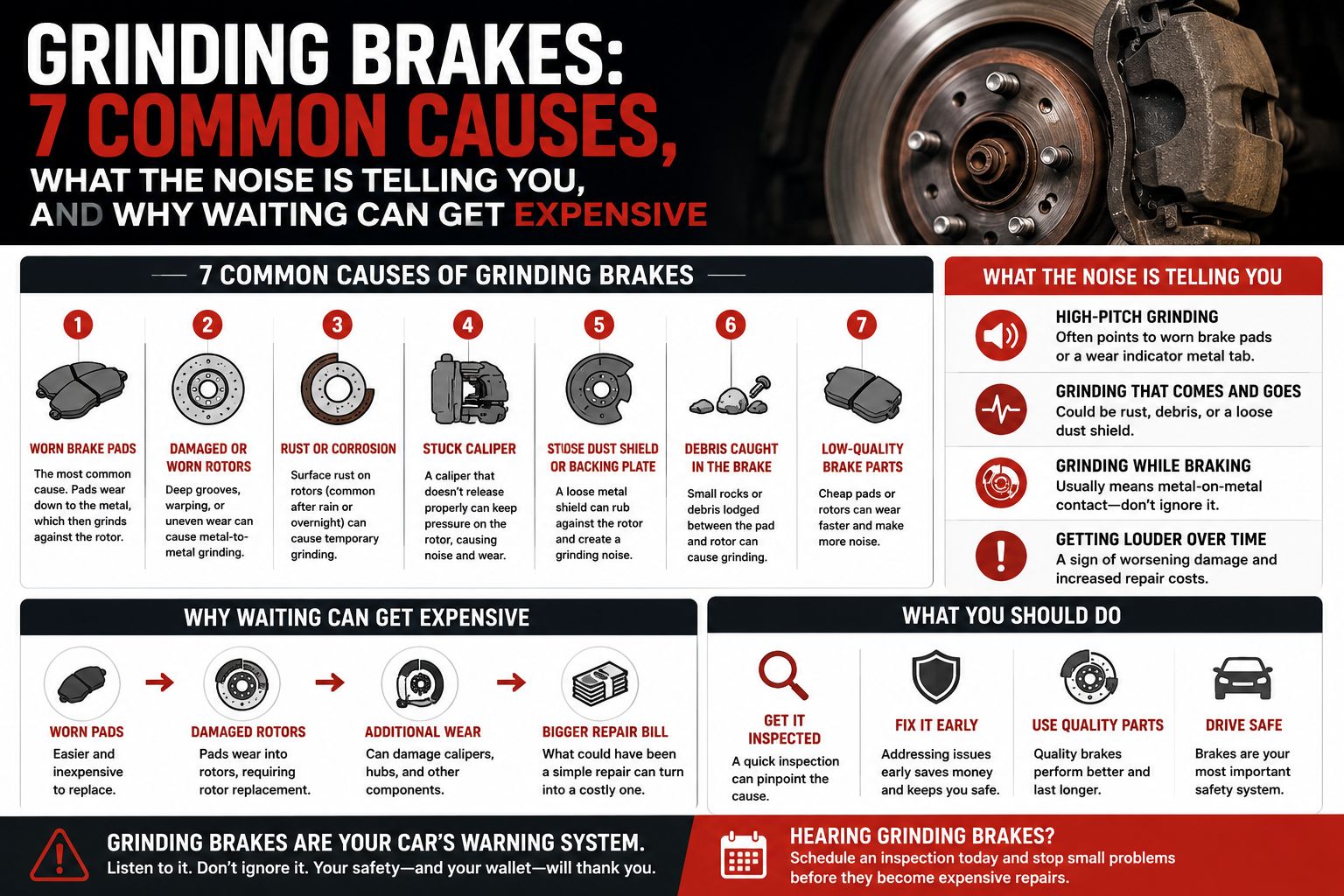
Few vehicle problems get a driver’s attention faster than grinding brakes.
It’s one of those sounds that instantly makes you turn down the radio, crack a window, and start wondering whether you’re dealing with a minor annoyance or a serious safety problem.
The reality is that brake grinding is rarely something you should ignore. Sometimes the cause is relatively simple. Other times, it’s your vehicle’s last warning before a straightforward repair becomes a much larger expense.
At Sweat Tire & Automotive, we’ve spent more than 60 years helping drivers throughout Baldwin County and Southern Alabama diagnose brake noises, steering problems, suspension wear, and tire issues. One thing we’ve learned is that the sooner a grinding noise is diagnosed, the more options drivers usually have.
My Brakes Are Grinding. Can I Still Drive It?
If the grinding is caused by worn brake pads, every mile you continue driving increases the likelihood of damaging the brake rotors and other components.
If the sound is being caused by a wheel bearing, suspension issue, or debris trapped in the brake assembly, continued driving can still create additional wear and safety concerns.
The safest move is to schedule an inspection before a manageable repair becomes a much larger one.
Learn more about professional brake inspections and repairs through Sweat Tire’s brake service team.
Why Grinding Brakes Don’t Always Mean Bad Brakes
One of the biggest misconceptions drivers have is assuming every grinding noise automatically means they need brake pads.
Sometimes that’s true.
But we’ve also diagnosed grinding noises that turned out to be:
- Wheel bearings
- Suspension components
- Rust buildup
- Brake backing plates
- Trapped debris
- Tire-related issues
- Steering components
That’s one reason replacing parts based solely on symptoms can become expensive.
The sound tells you something is wrong. It doesn’t always tell you what.
1. Worn Brake Pads
This is still the most common cause of grinding brakes.
Brake pads are designed to wear down gradually over time. Eventually, the friction material becomes too thin to perform properly.
Once the friction material is gone, metal components begin contacting the rotor directly, creating the grinding sound most drivers recognize.
Signs Your Brake Pads May Be Worn
- Grinding when braking
- Longer stopping distances
- Reduced braking performance
- Brake warning lights
- Vibration while slowing down
What We Frequently See in the Shop
A surprising number of grinding brake repairs don’t begin with customers complaining about brake noise.
They begin with customers coming in for something completely different.
We’ve inspected vehicles during tire replacements, oil changes, and alignments only to discover brake pads that were already worn down to the backing plate.
Modern vehicles are quieter than they’ve ever been. Between sound insulation, highway driving, Bluetooth calls, and everyday distractions, many drivers simply don’t notice brake wear until the damage becomes obvious.
By the time grinding starts, the repair often involves more than just brake pads.
Why Acting Early Matters
Consider two scenarios:
Scenario One
A driver replaces brake pads when they’re worn.
Scenario Two
The driver continues driving until grinding develops.
Now the repair may include:
- Brake pads
- Rotor replacement
- Additional labor
- Hardware replacement
The difference in repair cost can be substantial.
2. Damaged Brake Rotors
Brake rotors provide the smooth surface your brake pads clamp against.
Over time, excessive heat, neglected maintenance, and metal-to-metal contact can damage that surface.
Common rotor problems include:
- Deep grooves
- Heat spots
- Cracks
- Excessive wear
- Thickness variation
Something Many Drivers Get Wrong
Many people describe rotor problems as “warped rotors.”
True rotor warping is actually less common than most drivers think.
In many cases, the vibration drivers feel comes from uneven wear, rotor thickness variation, or uneven pad deposits rather than a physically bent rotor.
The symptoms feel similar from the driver’s seat, but the cause is often different.
Signs Rotor Damage May Be Present
- Grinding noises
- Pulsation in the brake pedal
- Steering wheel vibration
- Uneven stopping performance
- Increased brake noise
3. Debris Trapped Between Brake Components
Not every grinding sound means something is worn out.
In Baldwin County, it’s surprisingly common for small rocks, gravel, sand, or road debris to become trapped between the rotor and backing plate.
When that happens, the vehicle can sound like a major brake failure has suddenly developed.
Common Situations That Lead to Debris
- Gravel roads
- Construction zones
- Heavy rain
- Boat launches
- Off-road driving
A Clue That Debris May Be the Cause
If the sound appeared suddenly after driving through gravel or road debris, trapped material becomes a strong possibility.
One minute everything sounds normal.
The next minute the vehicle sounds like metal is dragging.
The Fix
A professional inspection can usually identify and remove the debris before it causes additional wear.
4. Sticking Brake Calipers
Brake calipers apply pressure to the brake pads.
When a caliper sticks, it may continue applying pressure even after you release the brake pedal.
That constant contact generates heat and accelerates wear.
Common Symptoms
- Grinding while driving
- Vehicle pulling to one side
- Uneven brake wear
- Burning odors
- Excessive wheel heat
- Reduced fuel economy
A Real-World Example
We’ve had customers come in convinced they had an engine problem because fuel economy suddenly dropped.
After inspection, the real culprit turned out to be a sticking brake caliper creating constant drag.
The engine wasn’t the problem.
The brakes were.
Why This Matters
A sticking caliper doesn’t just wear out brake components.
It can shorten rotor life, affect handling, and place additional stress on other systems.
5. Rust and Corrosion
Southern Alabama’s humidity creates ideal conditions for brake corrosion.
Light surface rust is completely normal.
In fact, many brake rotors develop a thin layer of rust overnight.
Is Rust on Brake Rotors Normal?
Usually, yes.
A light coating often disappears after a few normal braking cycles.
Heavy corrosion is different.
Vehicles Most Likely to Experience Brake Corrosion
- Vehicles parked outdoors
- Seasonal vehicles
- Low-mileage vehicles
- Fleet vehicles
- Cars that sit unused for extended periods
What We’ve Learned Over the Years
Vehicles that sit often develop more brake issues than vehicles that are driven regularly.
We’ve seen low-mileage vehicles require significant brake work simply because they spent long periods parked.
Mileage alone doesn’t tell the whole story.
6. Wheel Bearing Problems
Sometimes the grinding noise isn’t coming from the brakes at all.
Failing wheel bearings can produce sounds that many drivers mistake for brake grinding.
Common Symptoms
- Grinding or growling noises
- Vibration
- Noise that changes with speed
- Steering instability
Why Wheel Bearings Fool So Many Drivers
Wheel bearing failures often begin with a faint humming sound.
Because the noise develops gradually, drivers adapt to it.
They stop noticing it.
We’ve had customers come in for tire replacements and only realize something else was wrong after the new tires were installed and the noise remained.
The tires weren’t the issue.
The wheel bearing was.
7. Suspension and Alignment Problems
This is the category that surprises drivers the most.
Sometimes what feels like a brake problem isn’t a brake problem at all.
Common Symptoms
- Pulling during braking
- Uneven tire wear
- Steering instability
- Vibration
- Handling concerns
What We See Repeatedly
Customers frequently describe suspension problems as brake problems.
A vehicle that dives during braking, pulls to one side, or vibrates through the steering wheel naturally feels like a braking issue from the driver’s seat.
After inspection, we sometimes discover the braking system is functioning properly and the real culprit is worn suspension or steering components.
Why This Matters
A surprising number of brake complaints begin as tire or suspension complaints.
That’s one reason Sweat Tire often evaluates:
- Tires
- Alignment
- Steering components
- Suspension systems
alongside brake inspections.
These systems work together.
Ignoring one often affects the others.
Why You Should Never Ignore Grinding Brakes
Grinding noises rarely improve on their own.
What begins as a brake pad replacement can eventually involve:
- Rotors
- Calipers
- Brake hardware
- Wheel bearings
- Tires
- Suspension components
The longer the problem continues, the fewer repair options usually remain.
A Simple Example
A driver needs brake pads.
The repair is delayed.
Several months later, the pads have damaged the rotors.
Now the repair includes additional parts and labor.
The same principle applies throughout the vehicle.
Alignment issues become tire replacements.
Suspension problems become tire wear.
Cooling system leaks become overheating repairs.
Early diagnosis almost always costs less than waiting.
Take Advantage of Free Brake Inspections
One of the easiest ways to stay ahead of expensive brake repairs is through regular inspections.
During a brake inspection, technicians can evaluate:
- Brake pad thickness
- Rotor condition
- Caliper operation
- Brake fluid condition
- Tire wear
- Suspension concerns
- Steering components
Something Drivers Often Overlook
Tires frequently reveal developing problems before drivers feel them.
Uneven tire wear can indicate:
- Alignment issues
- Suspension wear
- Steering concerns
- Brake-related problems
That’s why a complete inspection often provides more value than focusing on a single symptom.
A Local Alternative to the Dealership
At Sweat Tire & Automotive, diagnosing grinding noises involves more than simply replacing brake pads.
Our technicians evaluate the complete vehicle because braking performance depends on multiple systems working together.
That includes:
- Brakes
- Tires
- Suspension
- Steering
- Alignment
- Wheel bearings
The goal isn’t to sell parts.
The goal is to identify the actual cause of the problem and recommend the most effective solution.
Need Repairs Now?
Many drivers postpone brake repairs because of cost concerns.
Unfortunately, waiting often increases the final repair bill.
Sweat Tire offers financing options that can help drivers address important brake, tire, suspension, and steering repairs before additional damage occurs.
If It Sounds Expensive, Don’t Wait to Find Out
Grinding brakes are one of the clearest warning signs a vehicle can provide.
Sometimes the cause is simple.
Sometimes it’s not.
The key is finding out which one you’re dealing with before additional damage occurs.
If you’re hearing grinding, scraping, vibration, or unusual brake noises, schedule an inspection. Diagnosing the problem early can help protect your brakes, tires, suspension components, and overall vehicle safety while potentially saving hundreds of dollars in additional repairs down the road.