
Do I need a Wheel alignment after New Tires?
When you invest in a new set of tires, you’re not just buying rubber; you’re restoring traction, handling, and ride quality. But, most drivers overlook the fact that installing new tires doesn’t automatically correct how your vehicle tracks down the road.
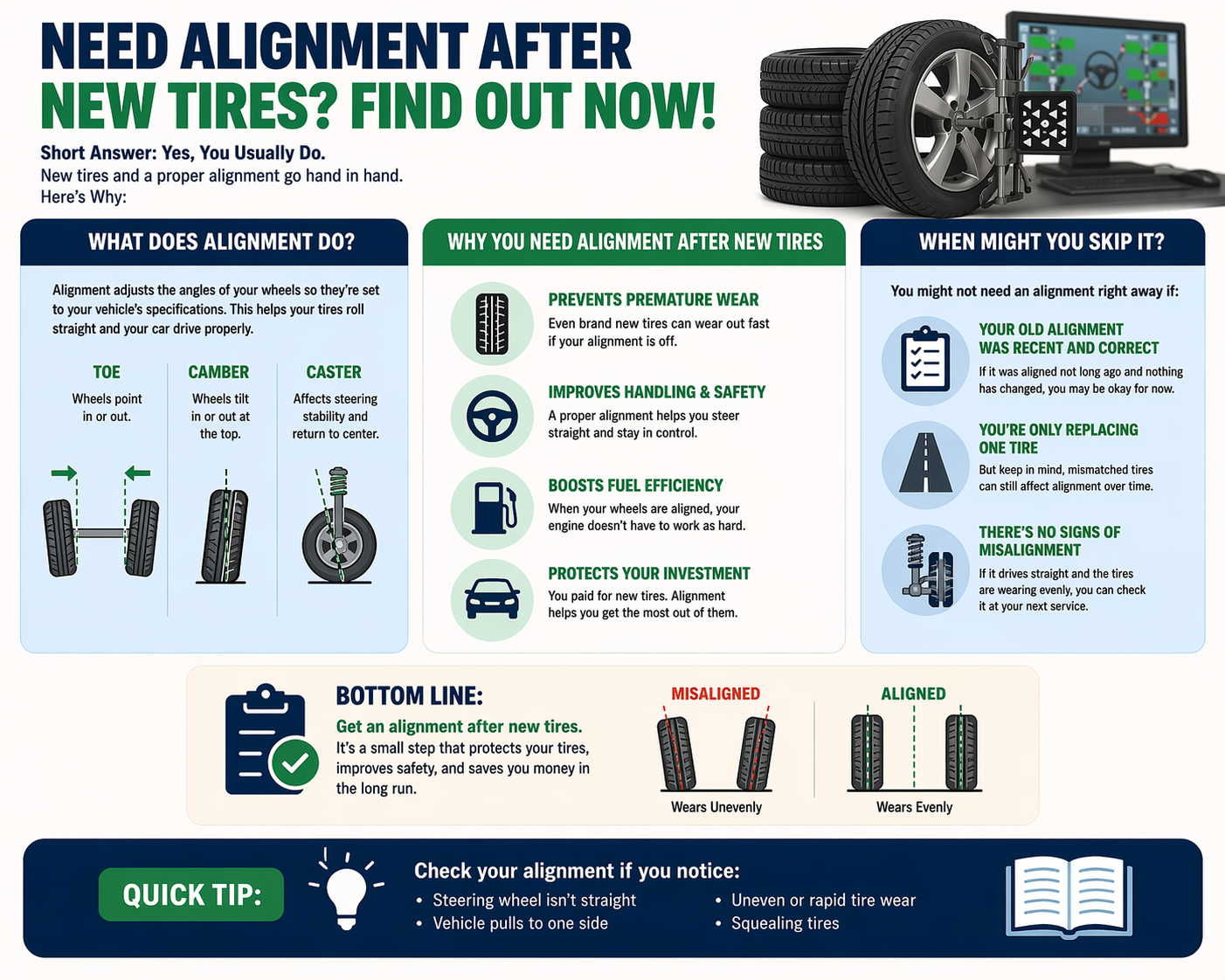
So, do you need an alignment after new tires? In most cases, yes. Skipping it can shorten tire life, degrade handling, and waste money faster than you think.
This guide breaks down when an alignment is necessary, why it matters, and how it ties directly into long-term vehicle reliability.
What Is Wheel Alignment (and What It Actually Adjusts)
A wheel alignment is not about the tires; it’s about how your suspension positions those tires relative to the road and each other.
Technicians adjust three key angles:
- Camber: The inward or outward tilt of the tire when viewed from the front
- Caster: The forward or backward tilt of the steering axis
- Toe: The direction tires point relative to each other (inward or outward)
If any of these are off, your new tires won’t wear evenly or grip properly.
At a professional tire shop, alignment is performed using laser or camera-based systems that measure deviations down to fractions of a degree. That precision matters. Small misalignments create large wear patterns over time.
Do You Need Alignment After New Tires?
Short answer: Not always, but usually.
You don’t technically need an alignment every time you install new tires. But, in real-world conditions, most vehicles benefit from it immediately after installation.
You SHOULD get an alignment if:
- Your old tires showed uneven wear patterns.
- The vehicle pulls left or right.
- The steering wheel is off-center.
- You’ve hit potholes, curbs, or rough roads.
- Suspension components have been replaced.
- You’re installing a full set of new tires (especially higher-end or commercial tires).
You MIGHT skip it if:
- Your previous tires wore evenly across all four positions.
- The vehicle tracks straight with no steering issues.
- Alignment was recently performed and verified.
Even then, skipping alignment is a calculated risk. You’re assuming nothing has shifted, which isn’t always a safe assumption, especially on vehicles driven daily in variable road conditions.
Why Alignment Matters More With New Tires
New tires come with full tread depth and maximum traction capability. That also means they’re more sensitive to misalignment.
Uneven Wear Starts Immediately
Misalignment doesn’t take months to show. It starts wearing down your tires within the first few hundred miles.
Common patterns include:
- Feathering (caused by incorrect toe)
- Inner or outer edge wear (camber issues)
- Cupping (often linked to suspension problems)
Once that wear begins, it cannot be reversed.
Reduced Tire Lifespan
A properly aligned vehicle helps tires last their full rated mileage. Without alignment, you could lose:
- 20-50% of tire lifespan
- Even more on performance or commercial tires under heavy loads
That’s a direct hit to your investment.
Compromised Handling and Safety
Misaligned wheels reduce:
- Straight-line stability
- Steering response
- Braking consistency
In wet or emergency conditions, this becomes a safety issue, not just a comfort issue.
Fuel Efficiency Drops
Incorrect alignment increases rolling resistance. That forces the engine to work harder, which increases fuel consumption over time.
Alignment vs. Tire Installation: Why They’re Not the Same
Many drivers assume alignment is included when installing new tires. It’s not.
- Tire installation = mounting, balancing, inflating
- Wheel alignment = adjusting suspension geometry
A reputable tire shop will recommend alignment based on inspection results, but it’s typically a separate service.
How Often Should You Get a Wheel Alignment?
Even outside of new tire purchases, alignment should be checked:
- Every 6,000-10,000 miles
- At least once per year
- After major impacts (potholes, curbs, accidents)
- After suspension or steering repairs
For drivers using trucks, fleet vehicles, or commercial tires, alignment checks should happen more frequently due to heavier loads and higher wear rates.
Signs You Need an Alignment Right Now
If you’ve recently installed new tires and notice any of the following, don’t wait:
- Vehicle drifts or pulls while driving
- Steering wheel isn’t centered
- Tires squeal during turns
- Uneven tread wear appears quickly
- Steering feels loose or unstable
These are early indicators that alignment is already off, and your new tires are at risk.
Why Drivers Trust Sweat Tire for Alignment Services
For more than 60 years, Sweat Tire & Automotive has built its reputation on doing the job right the first time. With multiple locations across Baldwin County and Southern Alabama, they provide:
- Precision wheel alignment using modern equipment
- Full-service tire shop capabilities, from installation to maintenance
- Support for passenger vehicles, trucks, and commercial tires
- Experienced technicians who understand real-world driving conditions
Whether you’re driving daily commutes, hauling equipment, or managing fleet vehicles, alignment is treated as a core part of vehicle reliability, not an upsell.
The Bottom Line
If you’re asking, “Do I need alignment after new tires?” you’re already thinking in the right direction.
Here’s the reality:
- New tires don’t fix alignment issues.
- Misalignment starts damaging tires immediately.
- Skipping alignment can cost more than the service itself.
In most cases, pairing new tires with a professional wheel alignment is the smart move. It protects your investment, improves handling, and prevents avoidable wear.
If you’ve just installed new tires (or plan to), get the alignment checked. It’s one of the simplest ways to extend tire life and keep your vehicle driving the way it should.